The Future of Care in Germany
The Future of Care in Germany is International
Did you know? According to recent data (IAB, 2024–2025), approximately 18% of all employees subject to social insurance contributions in the care sector in Germany do not hold a German passport. That’s over 300,000 people — almost one in five caregivers! Particularly noteworthy: since 2022, employment growth in this vital sector has been driven exclusively by international skilled and auxiliary workers.
Without this dedicated support from abroad, our care system would come to a standstill. But where do most of our indispensable helpers come from?
1. European Union (EU)
Eastern and Southeastern Europe are traditionally strongly represented. Nearly 100,000 care workers from EU member states work in Germany under freedom of movement rights. The largest group comes from Poland, closely followed by Romania and Croatia.
2. Western Balkans (Non-EU)
Thanks to the special Western Balkans regulation facilitating labor market access, tens of thousands of skilled workers from Bosnia and Herzegovina, Serbia, Albania, and Kosovo support us. Overall, the share from third countries has grown enormously: over 177,000 foreign care workers now come from non-EU countries.
3. Asia (Targeted Recruitment)
Due to the acute shortage of skilled workers, government agreements help with recruitment. Numbers are growing fastest here:
- Philippines: The number of care workers has increased 18-fold since 2015 to nearly 9,400 employees!
- India: A tenfold increase to approximately 8,800 skilled workers.
- Also growing rapidly: Vietnam.
4. Other Important Countries of Origin
- Syria: Through successful labor market integration, the number of care workers from Syria has increased tenfold over the last ten years, now reaching an impressive 17,000 employees in healthcare.
- Turkey: Turkish citizens have traditionally been a very large and stable pillar of the German care system.
- Ukraine: Since the start of the war, the number of Ukrainian skilled workers steadily grows as they enter care work after having their diplomas recognized or completing targeted training.
Additionally, new programs with North Africa (e.g., Morocco) and Latin America (e.g., Brazil) are gaining momentum.
📺 Video Tip on the Topic
If you’d like to learn more about how international professionals support our system, we recommend this impressive documentary:
Care Connects People Across Borders — and Language Should Never Be a Barrier! 💚
At Pflege Orga, we know: regardless of where the valuable support for your loved ones comes from — neither paperwork nor communication should be an obstacle.
The everyday reality often looks like this: many of our wonderful care workers in Germany speak Ukrainian, Polish, or English — while the families of those in need of care often only speak German. To bridge exactly this gap, we’ve developed something new for you:
🚀 NEW: Automatic Translation in Pflege Orga
One tap on “Translate” — and the message appears in your language. Right in the app! Everyone understands each other instantly, without detours through other programs.
Care Notes — Before
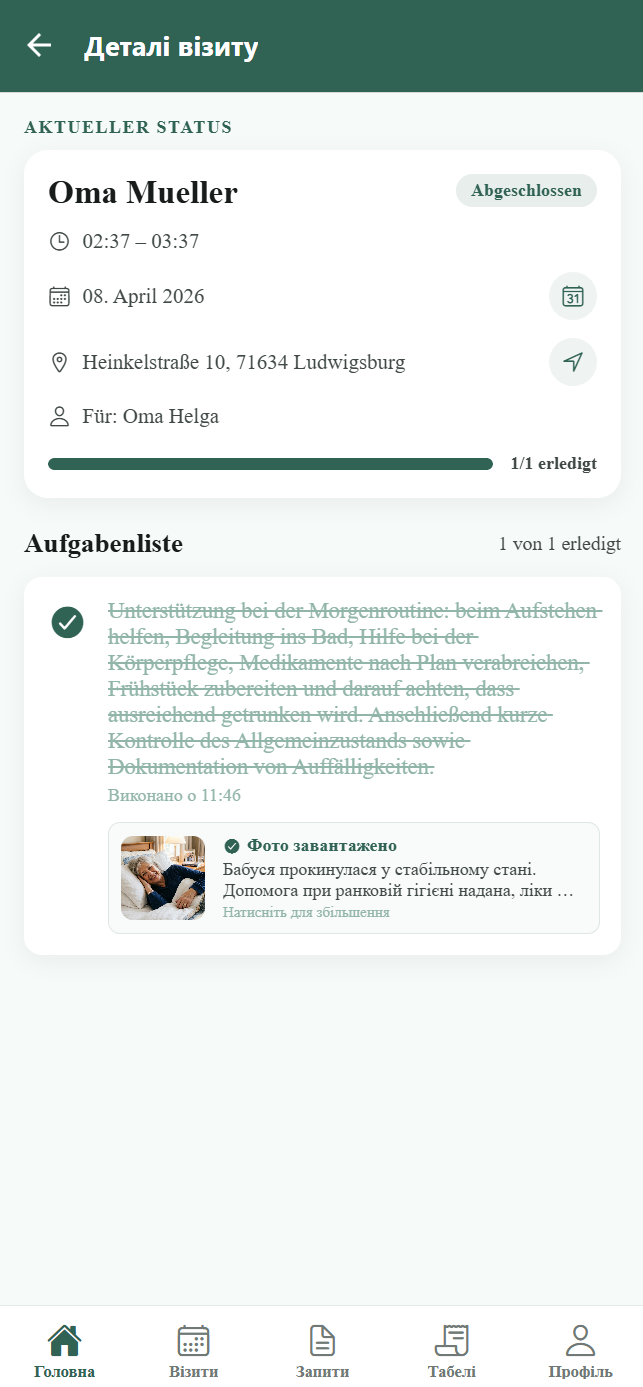
Care Notes — With Translation ✨
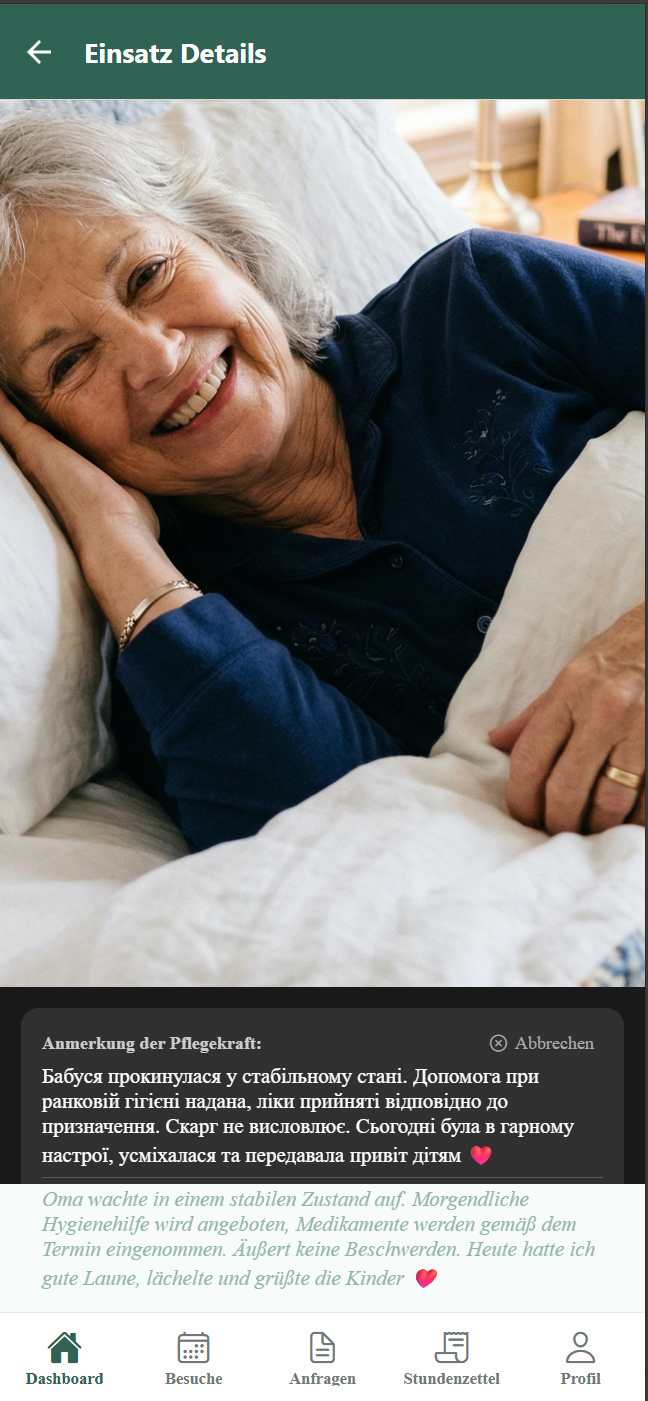
Tasks Are Automatically Translated
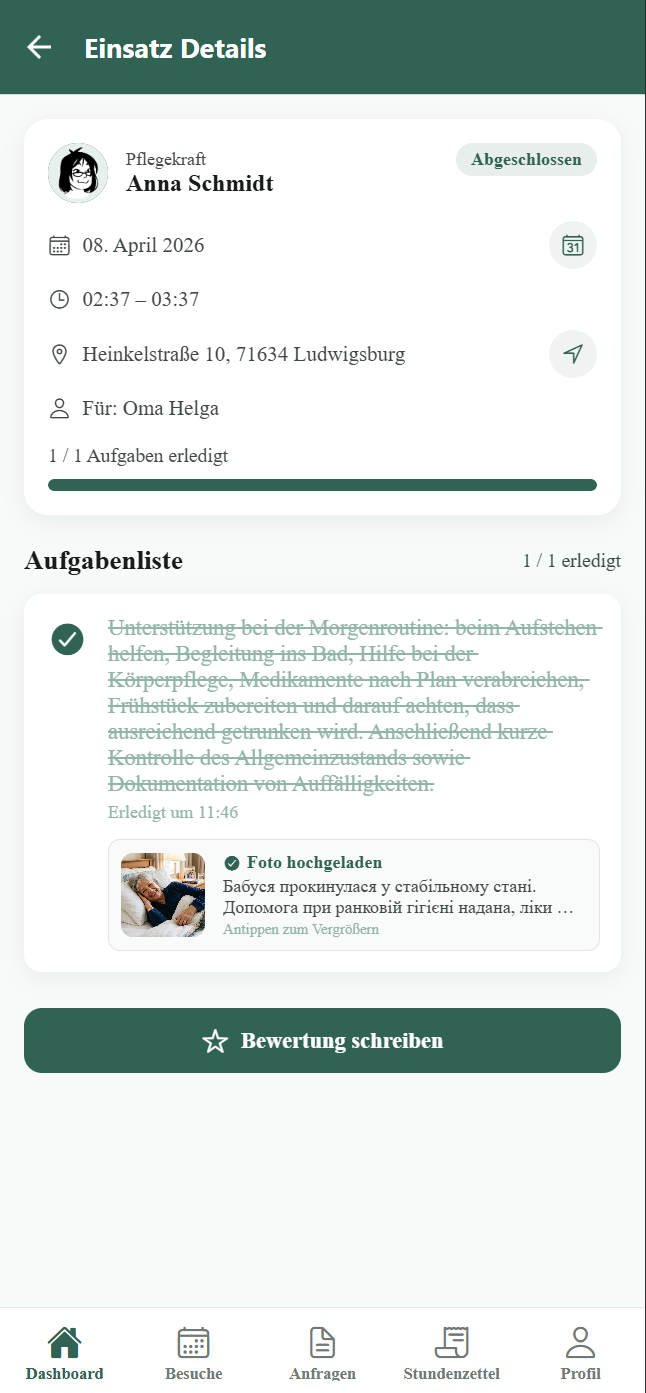
✅ What the New Translation Can Do:
- 20 Standard Tasks in 4 Languages (DE, EN, UK, PL)
- Care Notes translated with one click
- AI-Powered for natural, error-free translations
- Made for Families AND Care Workers
We help you organize home care simply, safely, digitally — and now also multilingually.